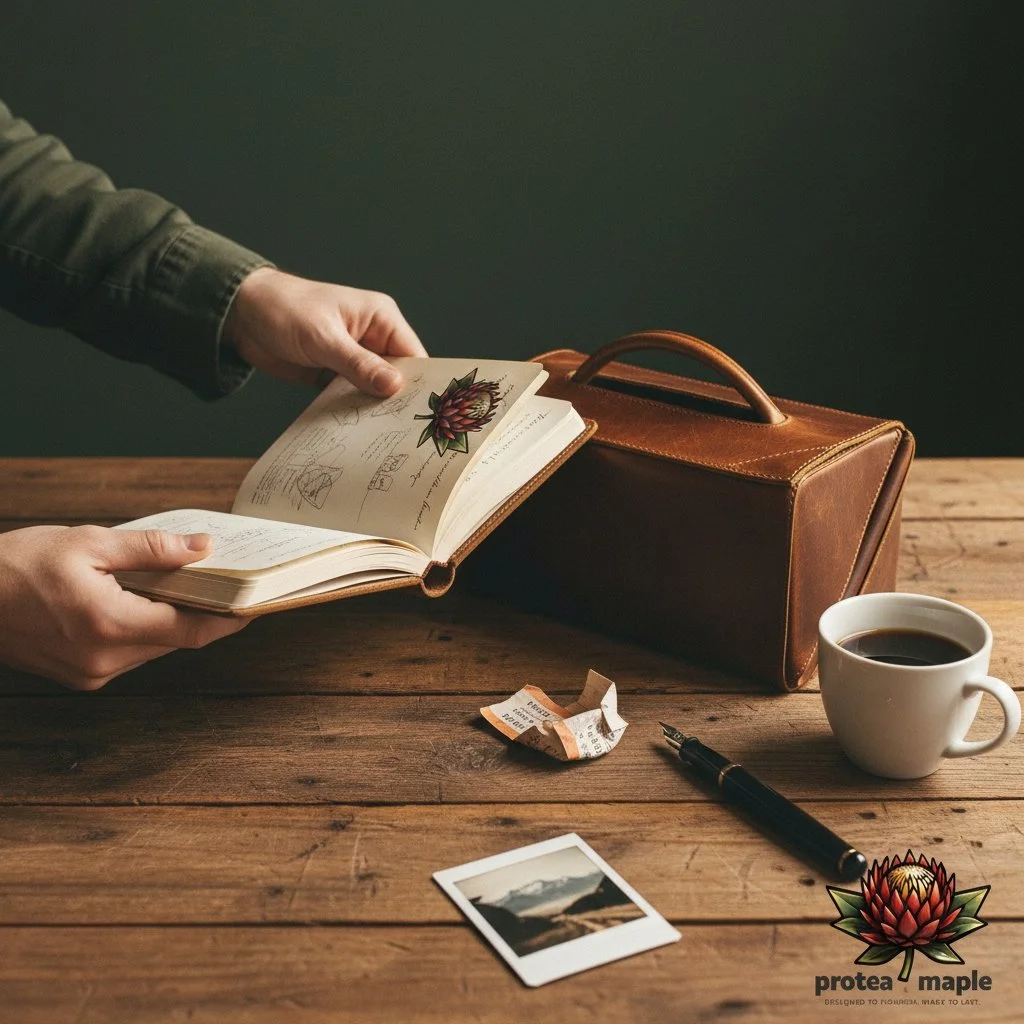
The Soul of Your Leather: A Guide to Lifetime Care
When you invest in a handcrafted Protea & Maple piece, you’re not just buying a bag or a wallet. You’re adopting a companion, a piece crafted from the finest full-grain leather, designed to last a lifetime.
A common question we receive is how to care for it. How to keep it "perfect." The truth is, "perfect" isn't a static, out-of-the-box newness. "Perfect" is a material that is alive, that breathes, and that ages gracefully with you.
Caring for your leather is simple. It's not about complex procedures; it's about gentle maintenance and, most importantly, about letting the leather be itself. Here is our complete 5-step guide.
1. Embrace the Patina
Your piece will develop a unique patina—a beautiful sheen and darkening—from sunlight, your hands, and daily use. This is the leather's story. Let it flourish.
This is the single most important part of owning full-grain leather. Patina is the hallmark of high-quality, natural leather. Those small scuffs, the way the handle darkens from your grip, the golden sheen it develops after a year in the sun—that isn't damage. That is character. We've chosen this material specifically because it does this, transforming from a new item into a one-of-a-kind artifact that is uniquely yours.
2. Keep it Dry
Try to avoid heavy rain. If your piece gets wet, blot (don't rub) with a soft, dry cloth and let it air dry slowly. Never use a hairdryer.
While our leather is durable, it's not invincible, especially against water. A light drizzle is usually fine, but if you get caught in a downpour:
Blot, Don't Rub: Rubbing can push the water deeper into the leather and spread stains. A gentle blot with a soft cloth (like an old t-shirt) is all you need.
Air Dry Slowly: Stuff your bag with paper or a towel to help it keep its shape and let it dry naturally, away from direct heat.
Why No Hairdryer? Direct, intense heat is the enemy. It will pull all the natural oils from the leather, causing it to become brittle, dry, and even crack. Patience is key.
3. Clean Gently
For dust, wipe with a soft, dry cloth. For small spots, use a slightly damp cloth on the affected area. Never use soap, household cleaners, or chemical solvents.
For 99% of its life, a simple wipe with a soft, dry cloth is the only cleaning your piece will ever need.
For Stubborn Spots: If you have a small, non-oily spot, a cloth barely dampened with clean water, applied with gentle dabbing, is the next step.
What to Avoid: This is critical. Never use:
Household Cleaners (Windex, etc.)
Alcohol-based wipes or solvents
Baby Wipes (these often contain oils or cleaners)
Saddle Soap (this is a harsh, old-school cleaner—far too strong for our leather) These products will strip the leather's oils and damage its finish.
4. Condition Sparingly
This leather is already rich with oils. You only need to condition it if it feels very dry, perhaps once a year. Use a natural leather balm, test on a hidden spot, and apply a very small amount with a soft cloth. Less is more.
We've chosen leathers that are already deeply nourished. You will not need to condition your item often.
How Often? Once a year is plenty for most people. If you live in an extremely dry climate, you might do it twice.
What Kind? Look for a natural leather balm or conditioner, ideally one with beeswax or other natural oils. Avoid anything with silicones or petroleum, which don't feed the leather and can seal it, preventing it from breathing.
The Process:
Ensure the bag is clean and dry.
Spot Test: Always apply a tiny amount to a hidden area first (like the bottom or inside a strap).
Use Your Cloth: Put a small dab on your cloth, not the bag.
Apply in gentle, circular motions.
Buff: After 15-20 minutes, use a separate clean, dry cloth to buff off any excess.
5. Store Properly
When not in use, store your piece in a cool, dry place, preferably in a breathable dust bag (never in plastic).
How you store your item is just as important as how you use it.
Use the Dust Bag: The breathable cotton dust bag we provide is not just for show. It protects your item from dust, scratches, and incidental sunlight, all while allowing the leather to breathe.
Keep its Shape: For bags, stuff them with acid-free paper, an old t-shirt, or a pillow to help them retain their structure.
Why Not Plastic? Never, ever store leather in a plastic bag or bin. Plastic traps moisture and air, which is a perfect recipe for mildew and can cause the leather to degrade.
Explore our collection of handcrafted leather goods or Share your leather's story with us on Instagram @proteamapleleatherco using #ProteaAndMaple.
THE ITAPAGIPE COURO COLLECTION

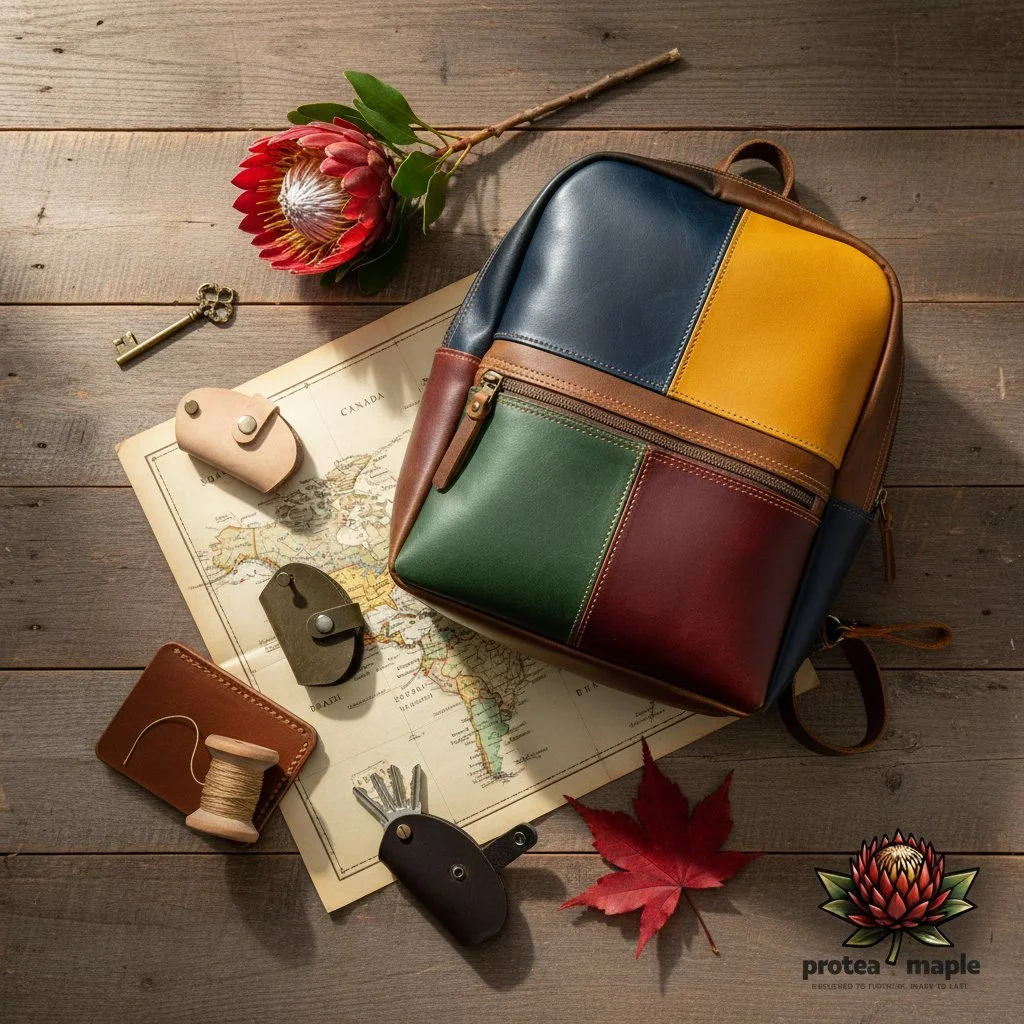
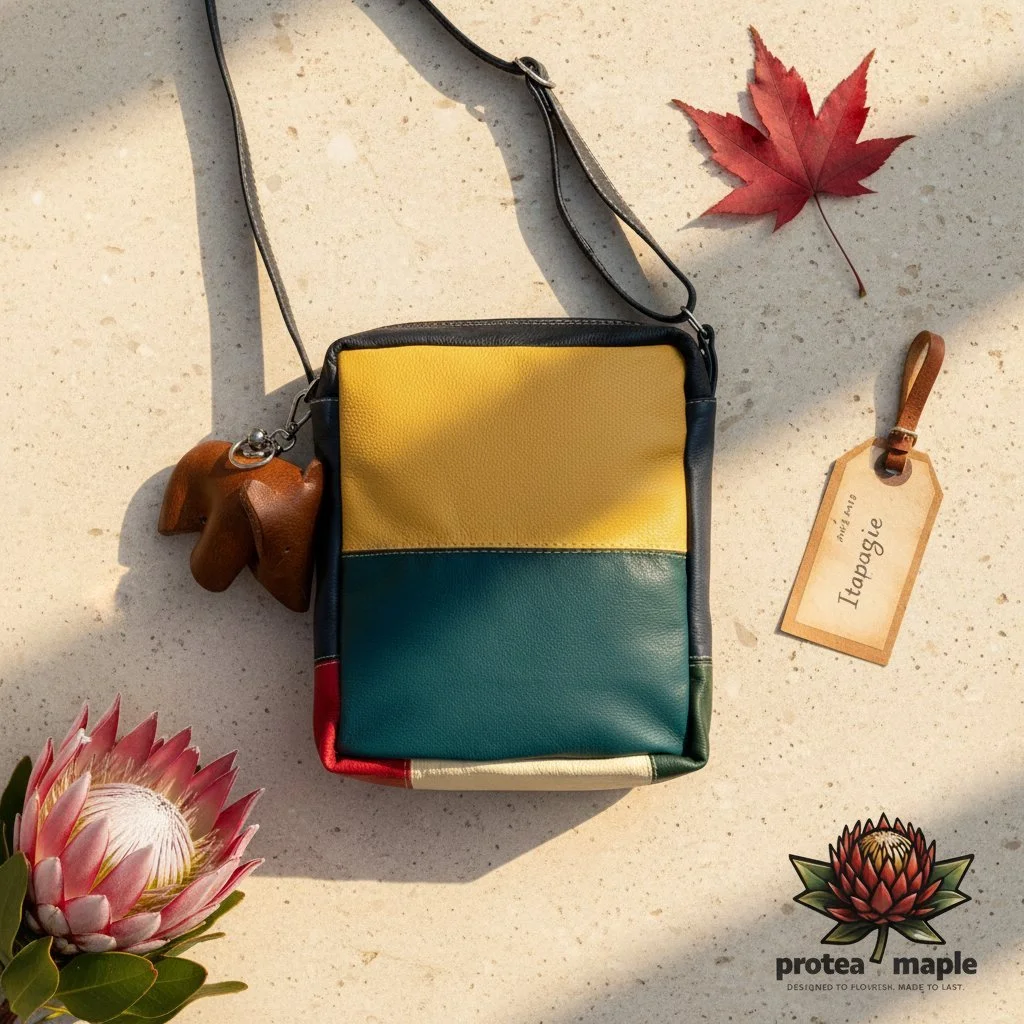
From Left to Right: the Paripe Backpack, the Kirimurê Handbag & the Pirajá Dopp Kit. Available now.
A Story from Salvador, Bahia
In 2020 I met someone in Toronto who changed how I see the world.
He's from Salvador, Bahia. And when he talks about his home, you hear it—the pride, the history, the connection. He doesn't just tell you facts about a place; he tells you why it matters. That's who he is. Someone who knows where he comes from and isn't afraid to say it.
When he took me to Salvador for the first time, I finally understood why.
The city moves differently than anywhere else I've been. There's music in the streets, real community in the markets, and this sense that everything means something. He showed me around like he was sharing part of himself—pointing out neighborhoods, telling me the stories behind the names, sharing what his mother used to tell him.
That's when he started mentioning the Tupi words. The original language of the land. How the place names—Kirimurê, Abaeté, Periperi, Itapuã—they all describe something real about the landscape and the people who understood it first. He'd say things like, "Did you know Itapagipe means 'flat stone in the river'?" with this genuine excitement. It wasn't academic to him. It was his heritage.
Sitting there listening to him, I realized something: I wanted to honor that. Not by pretending it's mine, but by keeping it alive. By using those names.
By making sure they stay in the world.
So I made these bags. Each one carries the name of a Salvador neighborhood or landmark, rooted in the Tupi language. When you carry an Abaeté or an Itapuã, you're carrying more than leather and craftsmanship. You're carrying history. You're speaking words that have echoed through centuries. In some small way, you're keeping that heritage alive too.
These are meant to last. They'll age, they'll change, they'll develop character. They'll become better with time and use—just like the stories they carry.
I made this for you. And in a way, I made it for him too.
Richardt
Welcome to Protea & Maple: Our Story is Live.
Hello, and welcome.
After months of late nights, learning curves, and countless stitches, I am incredibly proud and excited to announce that The Protea & Maple Leather Company is officially live.
This isn't just the launch of a new website and an online store. This is the new home for a passion that started by complete chance and has grown into a craft I'm proud to share with you.
For those of you who are new here, my story probably isn't what you'd expect.
By day, I've spent over a decade navigating the complex world of Financial Crime and AML Consulting—a field defined by structure, analysis, and a constant attention to detail. That part of my career brings stability, but it's only one side of who I am.
I practically grew up in my mother's studio. As an interior designer, she'd be at her sewing machine late into the night, and I was always nearby, watching her work. It wasn’t long before I went from observing to helping out myself. Some of my first memories are of sitting at her vintage hand-sewing machine, trying to make my own creations. I was so passionate that even after I managed to sew my hand to the fabric once, I just kept going—making pillows, book covers, and a few disastrous attempts at my own shirts.
Who knew those nights would one day pay off? My mom always encouraged creativity, even when it meant letting a determined kid learn through trial and error.
As I got older, that creative drive never faded—it just took on new forms. During my teenage years, I spent countless hours sketching surrealistic pencil portraits, always trying to capture the smallest details and emotions in a face. Later, I began painting with acrylics, exploring color and expression in a whole new way. Yet, no matter where my art took me, I kept coming back to hands-on, tactile craft—the kind I learned right there beside my mom.
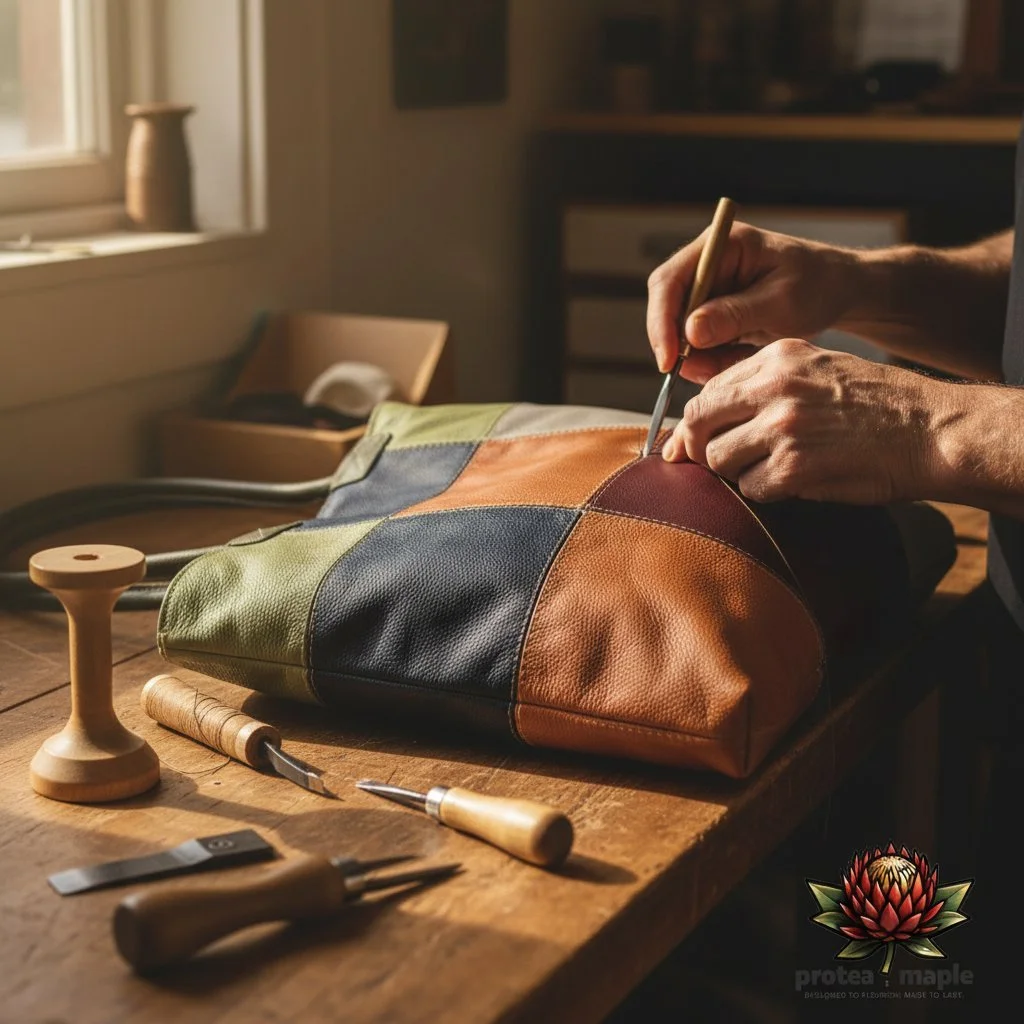
This chapter with leather started almost by accident, not so long ago. After unexpectedly losing my job, I found myself uncertain about what would come next. Around that time, my watch strap broke—no crisis, just a minor inconvenience. Instead of searching for a new one, I thought, "Why not try making it myself, just the way I wanted?"
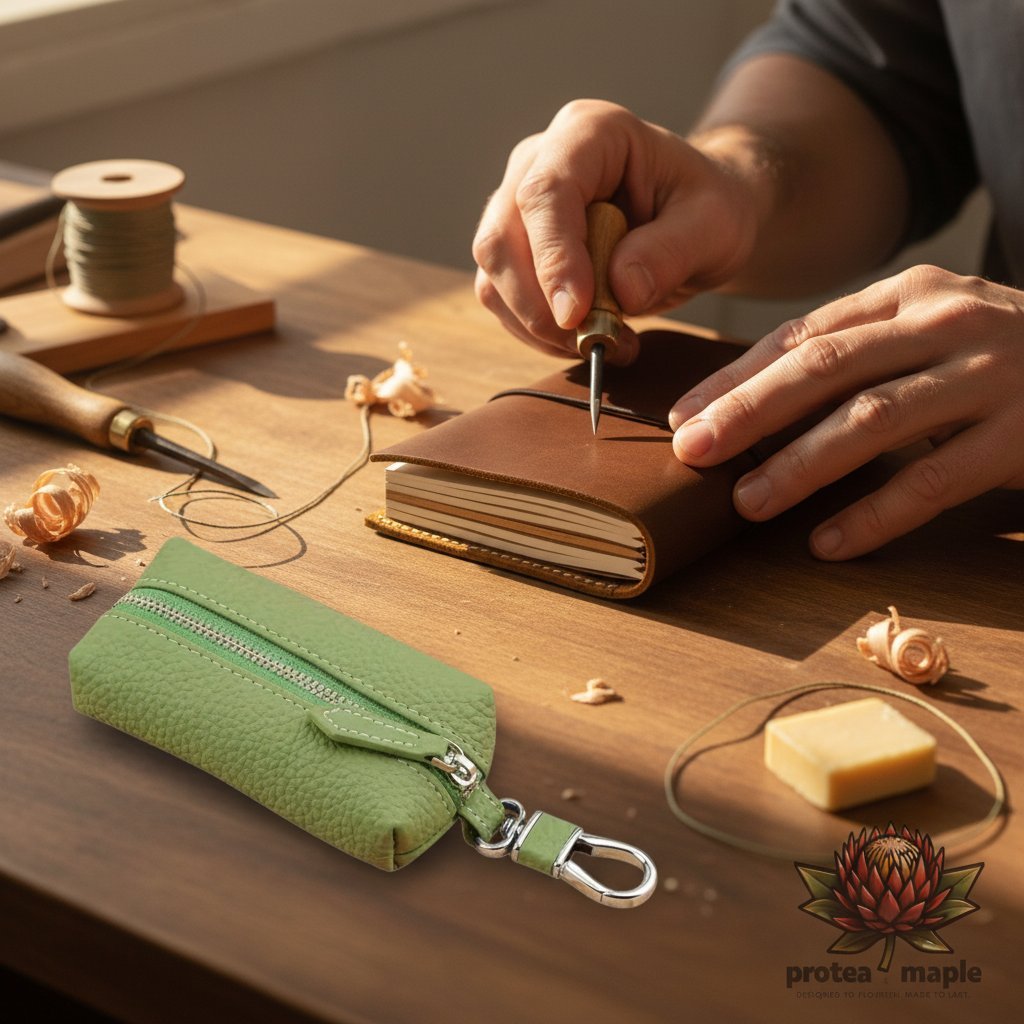
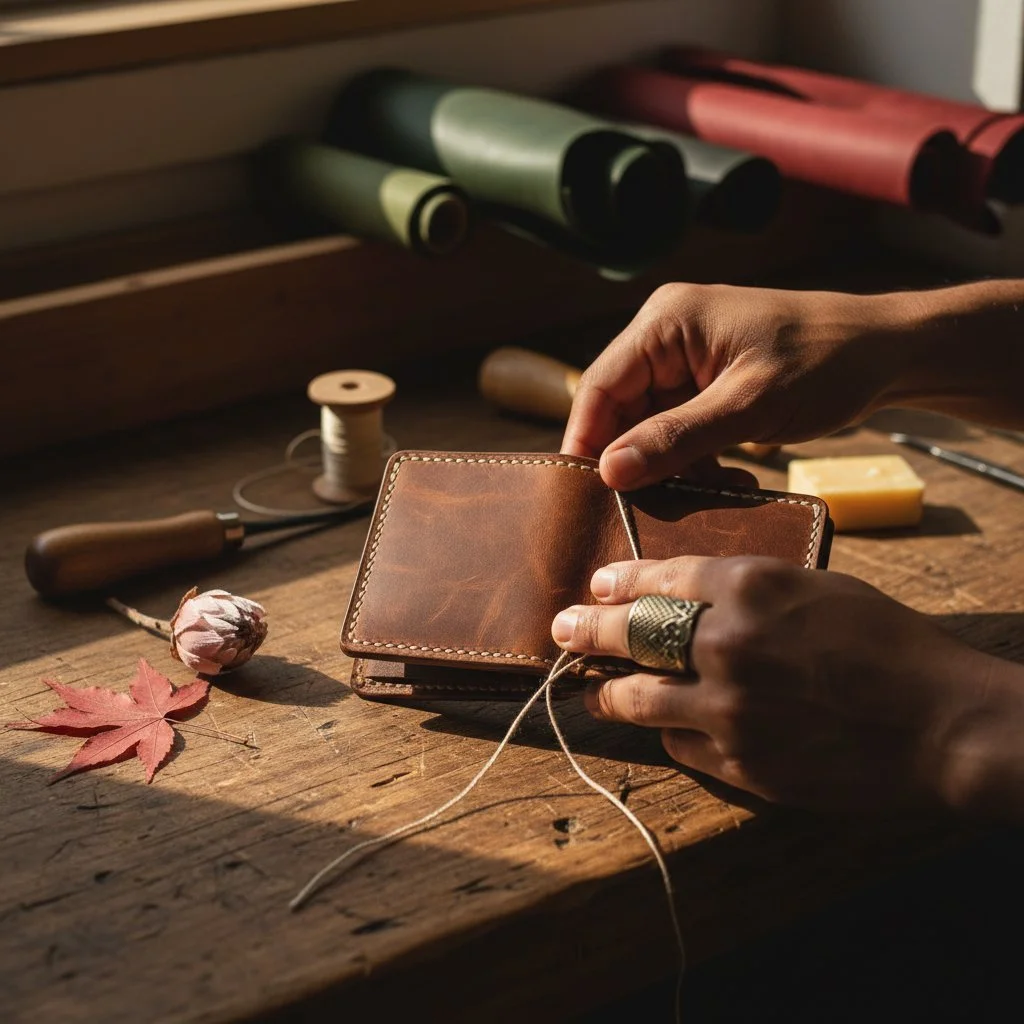
So, I did. I salvaged a strap from an old bag, taught myself some basics, and stitched something simple yet functional. The satisfaction in making something with my own hands struck a familiar chord. That small project sparked a bigger idea—could I try making a bag?
A few months down the line, The Protea & Maple Leather Company came to life. It's still a part-time pursuit—my consulting work pays the bills—but leathercraft is my passion. I almost skipped my first market event, second-guessing myself, but the encouragement I received confirmed that I was onto something meaningful.
Protea—representing my South African roots—symbolizes resilience and possibility. Maple—my Canadian home—stands for endurance and strength. This brand is the meeting point of both worlds. My work is "Designed to Flourish, Made to Last," shaped by the discipline and precision honed in consulting, but guided by the artist I've always been and the maker my mother helped nurture.
It's a personal journey, and I'm proud to share my craft with you.
What's Next?
Here on the new website, you can finally browse and shop the full collection. Every item is made by my hands, right here in Toronto.
But this is also the start of our community. I'm excited to share the process, the new designs, and the stories behind the craft on our new social media platforms. I invite you to follow along:
Follow us on Instagram: @proteamapleleatherco
Follow us on Facebook: The Protea & Maple Leather Company
Thank you for being here. Whether you're one of the amazing people I met at my first market or you're just finding us today, your support means the world.
This is just the beginning.
Welcome to Protea & Maple.
— Richardt